Education leaders are being asked to make faster, higher-stakes decisions while conditions change in real time. Enrollment patterns are shifting mid-cycle. Funding signals are becoming less predictable. Expectations for transparency from boards, states, and communities continue to rise.
This pressure is not unique to education. Gartner predicts that by 2027, 50% of organizational decisions will be augmented or automated by artificial intelligence, reflecting a broader shift toward real-time, data-driven decision-making in complex environments.
In K-12 systems, this shift is already underway. The Consortium for School Networking (CoSN) identifies generative AI and data visualization as top technology priorities shaping district leadership decisions heading into 2026.
Together, these forces point to one clear conclusion. Data and AI are no longer optional tools in education. They are becoming essential leadership infrastructure across K-12, P-20, and higher education.
Why Data and AI Matter for K-12 and P-20 Education Leaders
Education leaders are operating in an environment defined by speed, uncertainty, and interconnection. Enrollment patterns no longer follow predictable trends. According to the National Center for Education Statistics (NCES), US public school enrollment is projected to continue declining through at least 2031, with significant variation by region and student population.
Funding conditions are shifting more frequently, and student readiness now spans academic performance, social-emotional well-being, civic engagement, and workforce preparedness.
Legacy systems and delayed reporting cannot keep pace with these realities. When insight arrives weeks after conditions change, leadership decisions lag behind reality. What leaders need is clarity as conditions evolve, not after opportunities have passed.
The Data Foundation Behind AI-Powered Leadership
AI-powered dashboards and analytics do not operate in isolation. Their effectiveness depends entirely on the strength of the underlying data platform.
Modern education systems generate data continuously across student information systems, assessments, finance, HR, transportation, learning platforms, and state reporting environments. When this data remains fragmented or delayed, leaders are forced to rely on partial signals and outdated summaries.
Modern data platforms address this challenge by unifying structured and unstructured data into scalable cloud-based data lake architectures. These platforms ingest data continuously, apply governance where needed, and make information available for analytics and AI in near real time.
This matters because leadership decisions are rarely driven by a single system or metric. They require connected context across academics, operations, and finance. When modern data platforms reduce decision latency, insight delivery becomes continuous rather than episodic. Data shifts from a reporting function to a strategic leadership asset.
Trusted Data Architecture for AI-Driven Education Insights
Speed alone is not enough. For AI-powered analytics to be useful, leaders must trust the data behind the insight.
Many organizations struggle with inconsistent KPIs, conflicting dashboards, and low confidence in analytics because traditional data models were not designed for scale, real-time processing, or AI-driven workloads. This is why flexible, multi-layer data architectures have become essential.
In a multi-layer data model:
- The Raw layer preserves source data for traceability and governance
- The Curated layer standardizes and validates data for quality and consistency
- The Semantic layer delivers business-ready metrics aligned to leadership priorities
This architecture ensures that dashboards, alerts, and AI models operate on clean, consistent, and well-defined data. It also prepares the entire system for real-time analytics and AI, where accuracy and timeliness are equally critical.
Without this foundation, AI outputs quickly lose credibility. With it, data becomes a reliable asset leaders can trust when making high-stakes decisions.
Executive Dashboards for School District and State Leadership
For many districts, this shift is most visible in how strategic plan dashboards are being used to turn long-term goals into real-time leadership visibility. With strong data platforms and architecture in place, executive dashboards become a powerful leadership interface.
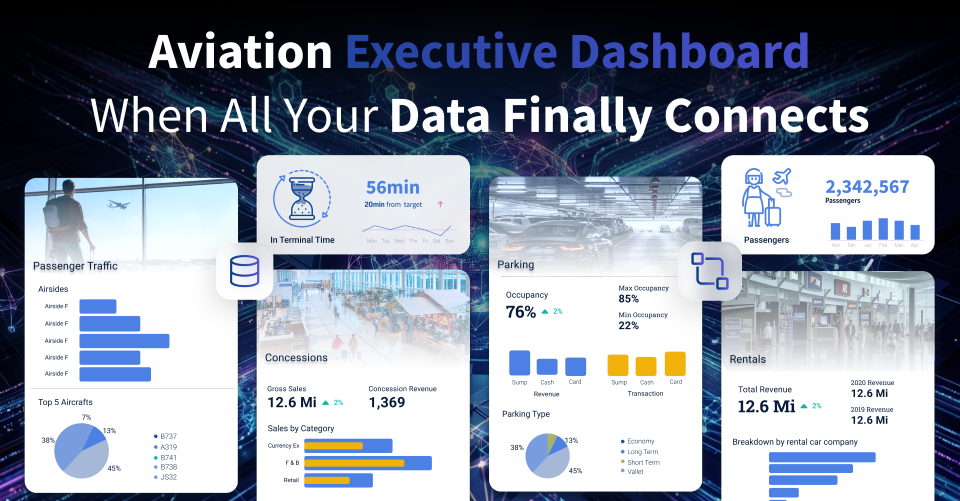
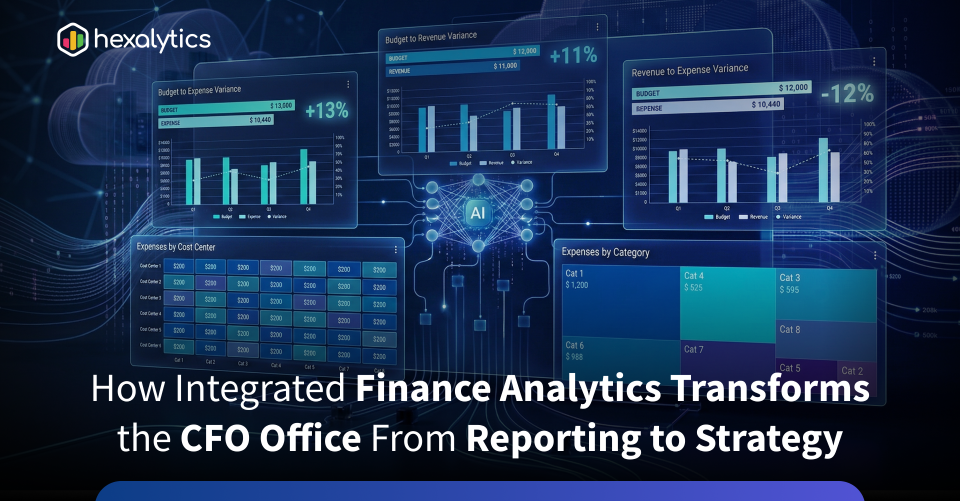
Superintendents, CFOs, and CIOs are increasingly turning to executive dashboards to bring fragmented systems into one coherent, leadership-ready view. Research from Gartner shows that organizations relying on disconnected data sources experience slower decision cycles and reduced confidence in strategic planning.
Modern executive dashboards unify data across student information systems, human resources, finance, and academic platforms to:
- Surface enrollment and staffing risks earlier
- Translate complex data into board-ready visuals
- Deliver role-based insight for aligned leadership
- Enable faster, more informed responses to operational shifts
Instead of reconciling reports, leaders engage directly with insight that reflects current conditions.
Predictive Analytics in Education for Early Risk Detection
Education dashboards are no longer limited to showing what has already happened. AI-driven analytics enable leaders to anticipate what is likely to happen next.
McKinsey & Company identifies predictive intelligence as a defining capability for organizations moving from reactive management to proactive leadership. In education, predictive features now support leaders by:
- Forecasting enrollment changes at the neighborhood level
- Identifying early warning signals for attendance and achievement risk
- Highlighting financial stress indicators before budgets are impacted
This shift from hindsight to foresight allows leadership teams to intervene earlier, allocate resources more strategically, and guide systems with greater confidence.
Enrollment Intelligence and Planning in K-12 Education
Declining birth rates, increased student mobility, and changing learner needs are reshaping enrollment planning across the country. NCES data confirms that enrollment decline is not a short-term anomaly but a long-term structural challenge for many districts.
Traditional enrollment tools, often siloed and retrospective, cannot provide the strategic clarity leaders need. Modern enrollment intelligence dashboards integrate student data, demographics, staffing, and financial signals into one connected view, enabling:
- Earlier intervention in declining grades or schools
- Staffing decisions aligned to projected enrollment
- Program and resource alignment to shifting community needs
AI-powered forecasting allows districts to model scenarios, protect funding, and plan with greater confidence.
P-20 Education Data Systems for Student Readiness and Outcomes
State agencies are increasingly recognizing that student readiness must be measured holistically. Research from the OECD emphasizes that readiness extends beyond test scores to include social-emotional development, civic engagement, and workforce
Statewide dashboards now support this broader perspective by tracking:
- Academic progress
- Social and emotional well-being
- Civic participation indicators
- Workforce and postsecondary readiness
AI-enabled natural language querying allows policymakers to ask complex questions across districts and programs and receive immediate insights. This capability supports earlier intervention, more transparent public reporting, and more responsive policymaking.
Higher Education Dashboards for Institutional Strategy and Performance
Colleges and universities are facing sustained pressure from declining enrollment, rising costs, and heightened accountability. Reports from Moody’s Analytics and Fitch Ratings consistently cite these forces as long-term challenges shaping the higher education sector.
In response, institutions are adopting enterprise-wide dashboards that unify data across academic, operational, and financial domains. These platforms enable leaders to monitor:
- Student success, retention, and completion
- Faculty capacity and diversity metrics
- Research funding and innovation momentum
- Financial performance and long-term forecasting
Unified institutional intelligence supports scenario modeling, strategic alignment, and more coordinated decision-making across campus leadership.
Conclusion: A Connected Intelligence System for the Future of Education
The power of data and AI in education is not defined by dashboards alone. It emerges from the full system: modern data platforms, trusted data architecture, real-time analytics, and AI-driven insight working together.
When these elements are aligned, education leaders gain the ability to see earlier, act faster, and align systems at scale. Strategy stays connected to daily reality. Risks are detected before they escalate. Progress is communicated with clarity and confidence.
With Hexalytics, districts, states, and institutions are building connected data ecosystems that transform information into leadership-ready intelligence, guiding every learner from classroom to career.
About Hexalytics
Hexalytics helps K-12 districts, state agencies, and higher education institutions build connected data ecosystems that transform complex information into leadership-ready intelligence.
We design AI-powered dashboards, analytics platforms, and modern data architectures that unify academic, operational, and financial data. Our solutions deliver real-time visibility, predictive insight, and trusted answers that support faster, more confident decision-making from classroom to career.
👉 Ready to see unified data and AI in action?
Schedule a strategic data review with Hexalytics.
Key Takeaways
- Data and AI support K-12 and P-20 leadership decisions
- Strong data foundations power AI insights
- Trusted data architecture ensures reliable analytics
- Executive dashboards provide real-time leadership visibility
- Predictive analytics helps detect risks early
- Enrollment intelligence supports K-12 planning
- P-20 data systems track student readiness and outcomes
- Higher education dashboards support institutional strategy
- Connected intelligence aligns data, insight, and action
- Hexalytics supports unified data and AI solutions