Every company from the startup to the global giant with its name on a skyscrapers buried in “stuff.” Laptops, delivery vans, software seats, heavy machinery, even those ergonomic chairs that cost a fortune. This is the operational bloodstream of your business.
But have you ever stopped wondering if your “stuff” has a secret life?
What if your assets are quietly bleeding your bank account dry? What if they’re sitting in a dark corner, collecting dust while you pay for their insurance? Or worse, what if a “lost” laptop is currently acting as an open door for a hacker?
By 2026, the Enterprise Asset Management market has exploded to over $7.7 billion. Why? Because companies are finally waking up to a brutal reality: “ghost assets” equipment that exists on your books but is nowhere to be found can eat up 25% of your IT budget. Even scarier? According to recent research by Trend Micro, a staggering 75% of cybersecurity incidents happen because of unmanaged assets.
Basically, if you don’t know you own it, you can’t protect it.
Welcome to the hidden world of unmanaged assets. We’re about to pull back the curtain on why dragging your equipment out of the shadows is the only way to stop the “ghosts” from haunting your bottom line.
Ready to find out what’s actually happening in your warehouse when you aren’t looking? Let’s dive in.
The Hidden Cost of Outdated Asset Inventories
In a large organization, it’s surprisingly easy for your asset inventory to drift away from reality. When hardware or software stays on your books after it’s been retired, lost, or scrapped, it becomes a Ghost Asset.
The issue is that these “ghosts” are a direct hit to your operational efficiency. If your IT asset management (ITAM) records show 1,000 active servers but 150 are actually sitting in a decommissioned pile, you’re hemorrhaging money on:
- Enterprise Insurance: Paying premiums for “active” inventory that provides zero value.
- Service Contracts: Cutting checks for preventative maintenance and vendor support on equipment that will never be turned on again.
- SaaS & Software Licensing: Paying for expensive seats and subscriptions that are currently assigned to empty desks or defunct projects.
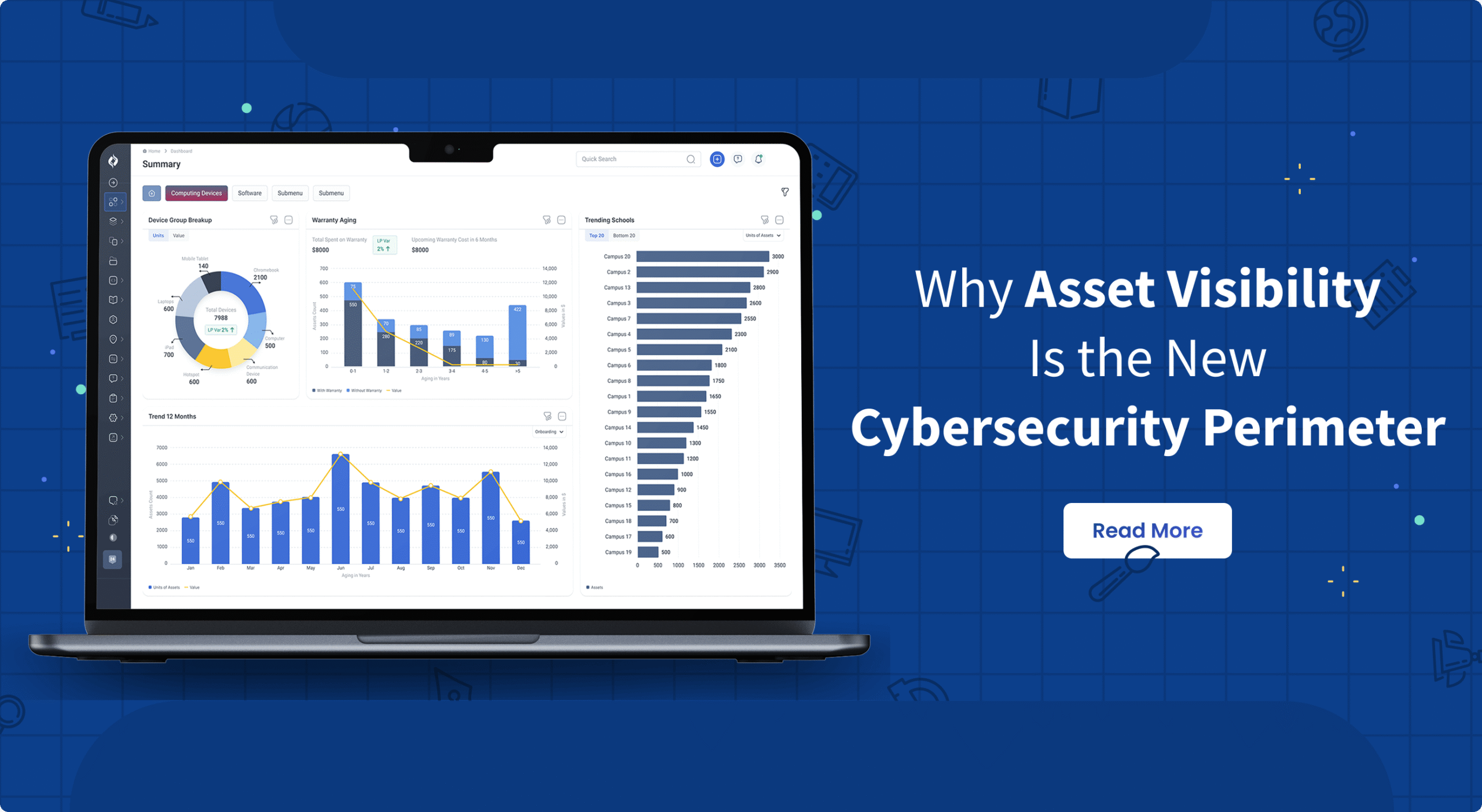
Beyond the wasted budget, there is a massive cybersecurity liability. An unmanaged asset is an unpatched asset. If a device isn’t being tracked by your Asset Fusion360, it isn’t receiving critical security updates. It becomes a “dark” node—a silent, vulnerable entry point into your network that your security team doesn’t even know they need to defend.
By automating your asset lifecycle management, you don’t just clean up your data; you harden your attack surface and reclaim your IT budget.
The Butterfly Effect: How Asset Entropy Kills Momentum
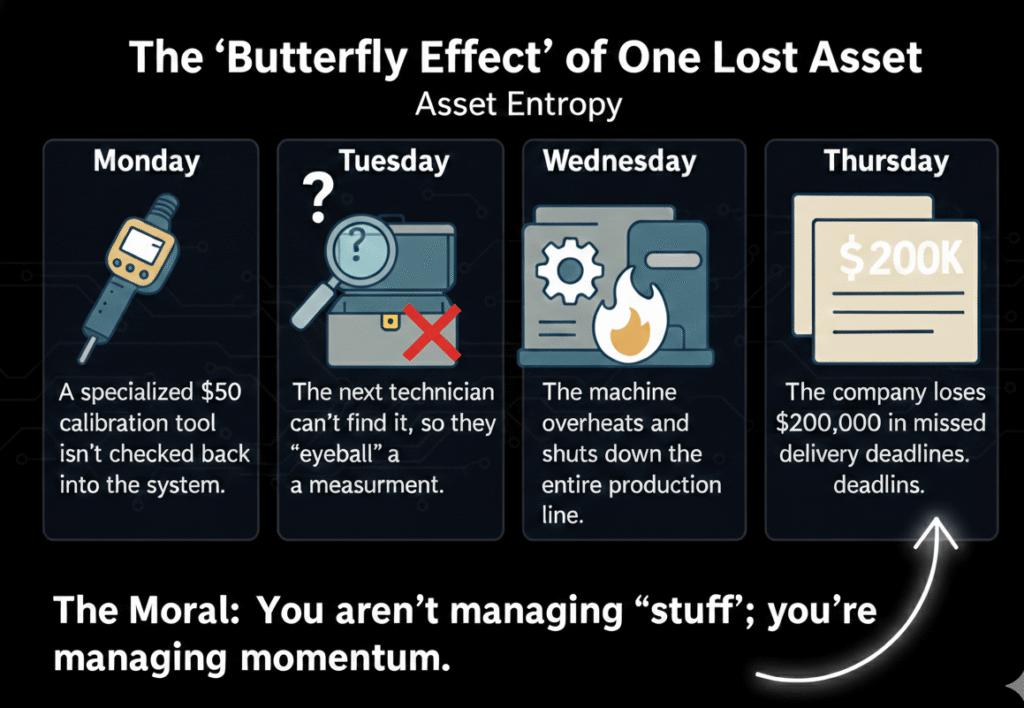
In a high-stakes operational environment, it’s rarely the big, obvious disasters that bring things to a grinding halt. It’s usually Asset Entropy—the slow, messy decay of your tracking system that leads to one tiny, missing link.
Imagine a specialized $50 calibration sensor or a specific diagnostic cable. In a disorganized system, that tool doesn’t get checked back into its centralized database. It’s not “lost”—it’s just… elsewhere.
Here’s how that one missing piece of critical infrastructure triggers a chain reaction:
- The Bottleneck: A technician can’t find the tool, so a high-value inspection is delayed by two hours.
- The Forced Error: Under pressure to meet a deadline, the team “eyeballs” a measurement or uses a non-calibrated substitute.
- The Failure: That minor inaccuracy leads to a part failure inside a multi-million dollar machine 48 hours later.
- The Downtime: The entire production line goes dark. Now, you aren’t just looking for a $50 tool; you’re losing thousands of dollars per minute in unplanned downtime.
This is why real-time asset tracking isn’t just about “counting things.” It’s about protecting your operational uptime. When you use automated workflows and IoT-integrated tracking, you ensure that the right tool is in the right hands at the exact moment it’s needed.
By eliminating these “small” search-and-find missions, you aren’t just saving time—you’re preventing the $200,000 mistakes that start with a single misplaced asset.
The Master Conductor: Turning Asset Chaos into Harmony
If your workplace feels like a constant fire drill, you’re likely dealing with “silos.” This happens when one team buys brand-new gear while another department has the exact same equipment sitting unused in a closet. This lack of communication is “operational noise,” and it’s a clear sign that your resources are totally out of sync.
Think of an Enterprise Asset Management (EAM) solution as a conductor. It gives you the bird’s-eye view needed to turn messy, disjointed efforts into a smooth, high-performance operation.
Here is how a tuned-up asset strategy changes the game:
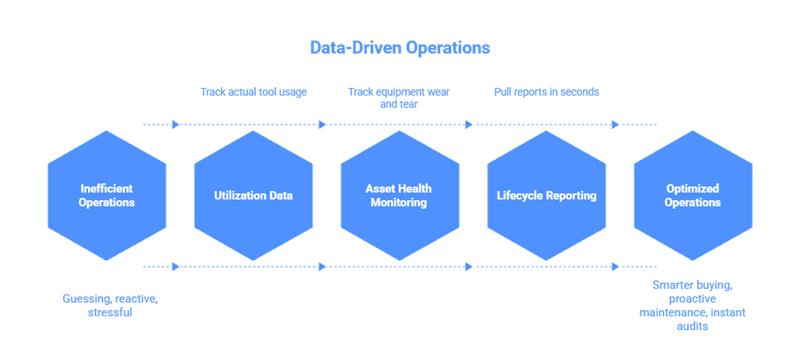
- Smarter Buying: Instead of guessing, use utilization data to see what you actually use. You stop over-spending and start moving existing tools to where they’re needed most.
- Predicting Breakdowns: You move away from “fixing things when they break” and start monitoring asset health. By tracking wear and tear, you can fix equipment before it fails during a busy shift.
- Instant Audits: No more digging through messy spreadsheets. You can pull a lifecycle report in seconds, proving you’re meeting safety and legal standards without the stress.
By getting all your assets on the same page, you stop reacting to daily headaches and start seeing a real ROI. You’re no longer just “tracking things”—you’re making sure your company has exactly what it needs to grow.
Bringing it All Together: AssetFusion360
If asset management is the “map” of what you own, then ITSM (IT Service Management) is the “engine” that keeps it all moving. Most companies keep these two in separate worlds but AssetFusion360 bridges that gap by putting them into one intelligent platform.
Instead of jumping between a spreadsheet for inventory and a portal for support tickets, AssetFusion360 unifies the two. Here is how that connection makes life easier:
- Tickets with Context: When an employee submits a help request, the system automatically links it to the exact device they’re using. Your support team doesn’t have to ask, “What’s your serial number?”—they already see the device’s age, repair history, and warranty status.
- Zero Double-Entry: Whether you’re checking out a new laptop or retiring from an old server, the change happens in both your asset records and your service logs at the same time. This eliminates human errors that usually lead to “ghost assets.”
- Total Lifecycle Visibility: You can track an asset from the moment it’s purchased to the day it’s recycled. By seeing how many tickets a specific model generates, you can make smarter decisions about which brands to buy (and which to avoid) in the future.
- Automated Workflows: From simple device assignments to complex audits, the platform handles the boring stuff. This frees up your team to focus on bigger goals instead of chasing down missing gear.
By combining AssetFusion360, you aren’t just managing “stuff”—you’re creating a smooth, data-driven system that saves money and stops the daily chaos.
About Hexalytics
Hexalytics is a high-end analytics and data engineering firm dedicated to solving complex business problems through modern visualization and AI-driven insights. We help organizations—from K-12 school districts to global enterprises—unify their data, automate manual processes, and make decisions with total confidence.
Whether it’s through our specialized solutions like AssetFusion360 or our custom data warehouse and AI services, we specialize in turning “raw data” into a clear strategic advantage. At Hexalytics, we don’t just show you your data; we show you the way forward.