In 2026, the novelty of Large Language Models has been replaced by a cold reality: an AI agent is only as powerful as the data it can touch. As Forrester notes, AI has traded its “tiara for a hard hat,” and Gartner confirms that success is now determined by data architecture, not the model itself.
The bottleneck isn’t sophistication—it’s Data Readiness. To move from simple chatbots to true Agentic Swarms, you must stop managing isolated silos and start orchestrating a unified Intelligence Layer. This blog explores how to bridge that gap and achieve enterprise-wide sovereignty.
Why Your 2026 AI Strategy is Stalling
In 2026, the gap between AI hype and business reality is defined by one factor: Data Readiness. While most organizations have deployed high-end Large Language Models (LLMs), nearly 80% of these initiatives struggle to scale because their intelligence is trapped in fragmented silos.
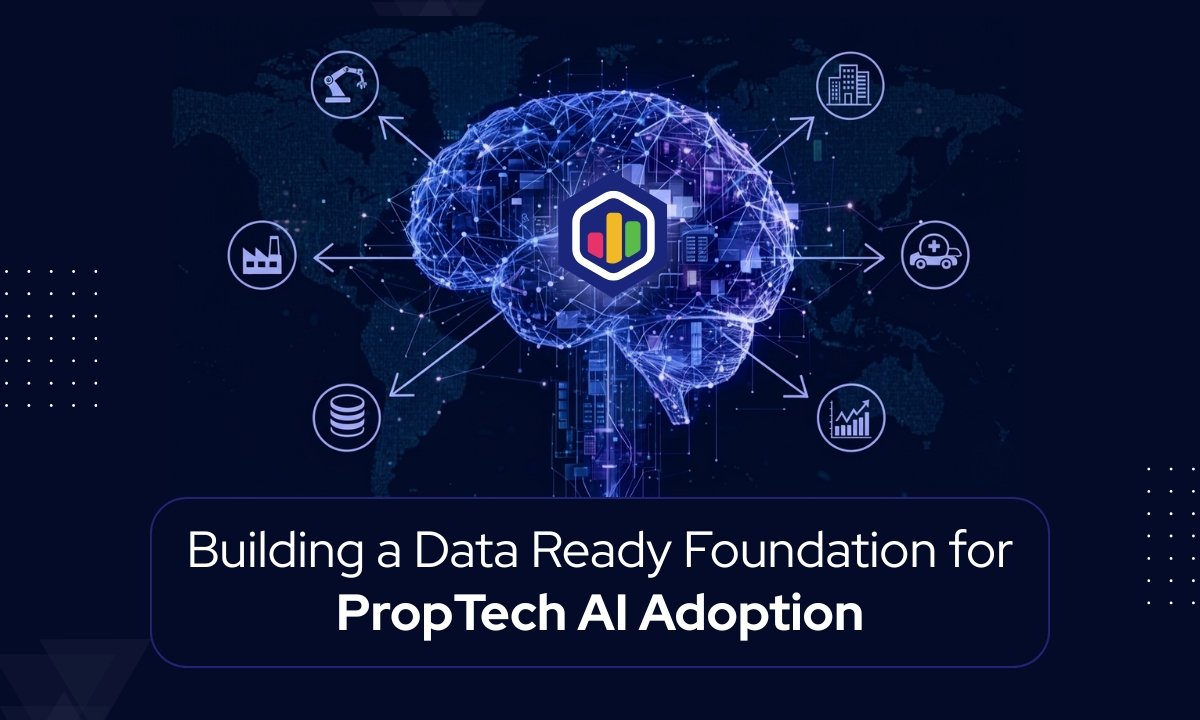
If your AI agents cannot “see” across your ERP, CRM, and legacy databases, they aren’t autonomous—they are isolated. To move from simple chatbots to Agentic Swarms, you must transform these disconnected pockets of information into a unified, AI-Ready Intelligence Layer.
The bottleneck isn’t the model; it’s the accessibility of context. Most enterprises are currently running “model-rich, data-poor” environments. You might have the latest reasoning engine, but if it lacks real-time visibility into your supply chain or customer history, it’s essentially making high-stakes decisions in the dark.
This fragmentation creates “Data Debt”—the hidden cost of manual work and engineering hours spent fixing, cleaning, and connecting broken data every time a model runs. In 2026, the competitive advantage has shifted from who has the largest model to who has the most liquid data. An Intelligence Layer acts as a connective tissue, ensuring that when an agent triggers a workflow, it isn’t just predicting the next word; it’s accessing a synchronized “Single Source of Truth” that spans your entire digital footprint.
The Cost of Fragmentation in 2026
In 2026, fragmented data isn’t just an IT headache—it’s a direct leak in your balance sheet. We’ve moved past the era of “missing a few insights” and entered the era of systemic failure. When your information is trapped in disconnected pockets, your AI strategy doesn’t just slow down; it disintegrates.
Recent 2026 benchmarks from Gartner and IBM highlight a grim reality: poor data quality and siloed architectures cost organizations an average of $12.9 million to $15 million annually. In fact, IBM research shows that over 25% of organizations lose more than $5 million every year specifically due to data integrity issues.
When data is siloed, your AI initiatives fall victim to three “silent killers”:
- Decision Lag: AI agents trained on “partial truths” are dangerous. They provide confident but inaccurate forecasts that lead to bad pivots. According to Gartner, through 2026, 60% of AI projects will be abandoned because they aren’t supported by AI-ready data.
- Quiet Failures: Without cross-platform visibility, autonomous workflows break the moment they hit an invisible “data wall.” A customer service agent that can’t “see” real-time shipping updates in your ERP will confidently promise a delivery date you can’t hit—destroying trust in seconds.
- Compute Waste: Running high-end models on “dirty” data is an expensive mistake. The constant need for repetitive cleaning and “re-training” cycles can inflate your cloud bill by 60% or more. You end up paying for the AI’s “brain power” to do the work of a basic data cleaner.
The Hexalytics Roadmap: From Silos to Sovereignty
At Hexalytics, we don’t just “connect” your data; we re-engineer it for the age of orchestration. Our solutions are designed to build the foundational Intelligence Layer that 2026 demands.
1. Architecting the Foundation withHexalyticsData Warehouse
We move beyond traditional storage. Our Data Warehouse and Data Centralization services create secure, air-gapped repositories that serve as the “Single Source of Truth” for your AI agents. By unifying structured and unstructured data, we ensure your models operate with 100% context.
2. Orchestrating withHexalyticsMAX
Our Modern Analytics Experience (MAX) acts as the orchestration engine. It transforms raw data into AI-Ready Products—clean, governed, and ready for multi-agent collaboration. This layer allows your “Synthesist” agents to pull real-time insights from across the enterprise without manual intervention.
3. Natural Language to SQL
Data is only useful if your team can reach it. Our Natural Language to SQL tool allows non-technical leaders to query this new intelligence layer directly. This eliminates the “Developer Bottleneck,” allowing your business units to ask complex questions and receive instant, data-driven answers.
About Hexalytics
Hexalytics is the leader in orchestrating enterprise intelligence for the 2026 AI supercycle. We specialize in the Modern Analytics Experience (MAX), transforming fragmented data silos into unified, AI-ready Intelligence Layers. By replacing Data Debt with high-velocity architecture, we empower organizations to move beyond simple automation toward true Agentic Sovereignty. From secure, air-gapped warehouses to industry-specific 360 solutions, Hexalytics ensures your data is liquid, governed, and ready to lead.
Conclusion
In the 2026 supercycle, the winners aren’t the ones with the biggest models; they are the ones with the best data. Transforming your fragmented silos into an intelligence layer is the only way to achieve 80% agentic autonomy and protect your competitive advantage.
Ready to modernize your data platform?
Get in touch with our team to learn how we can help you build a future-ready AI strategy.