From Vision to Visibility Strategic Plan Dashboards Improve District Leadership
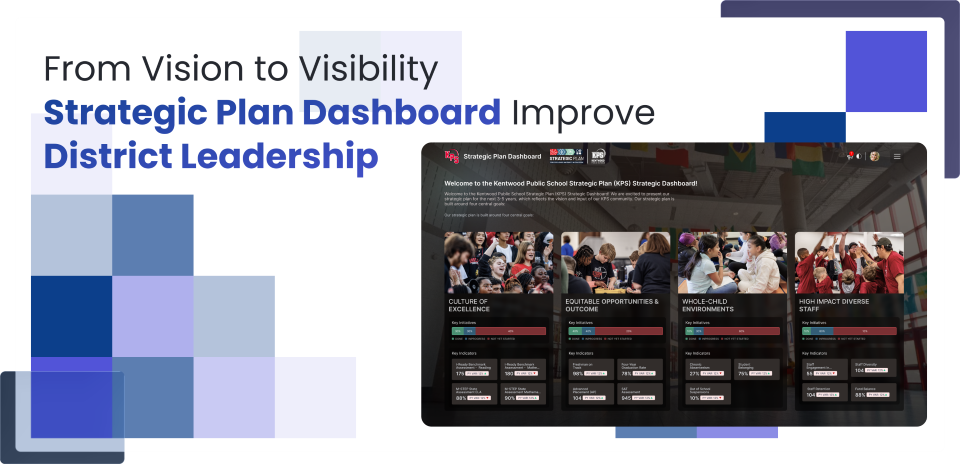

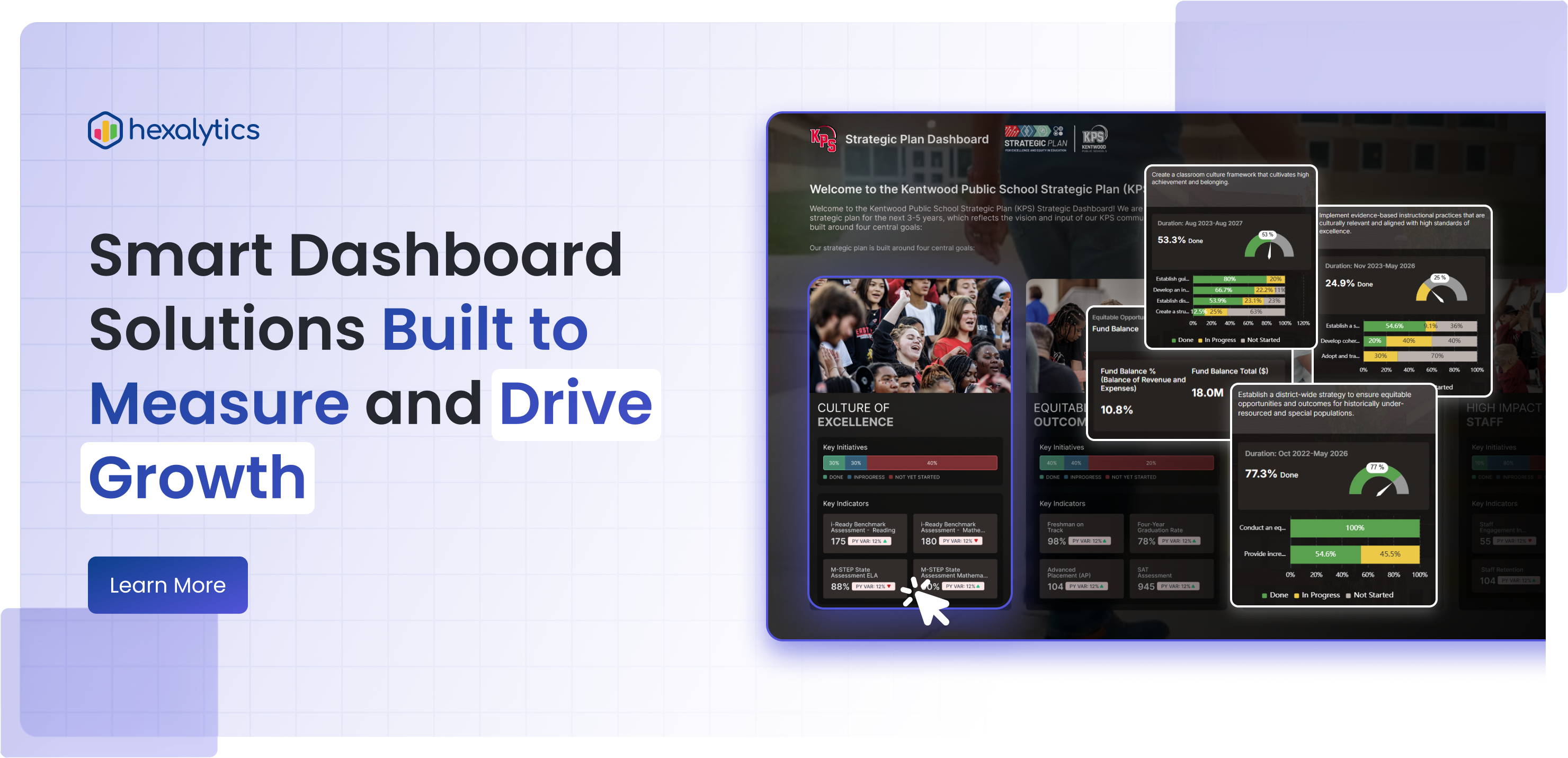
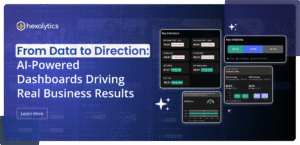
This is why districts across the United States are moving away from static documents and toward a strategic plan dashboard capable of unifying insight, strengthening district performance visibility, and supporting real time strategic planning for school districts. Modern, AI powered school dashboards transform the plan into a living system that guides leaders daily.
A strategic dashboard changes this pattern by grounding every conversation in the same source of truth. It supports education data insights that help leaders see conditions as they shift, in one unified environment.
This level of clarity is essential for districts committed to K12 leadership analytics and more consistent improvement.
Teams stay aligned because everyone works from the same definition of progress. Decisions become faster because leaders no longer wait for compiled reports. Support becomes precise, reaching the departments or schools that need help now. Boards gain clarity through education dashboards for school boards designed for transparency.
See how AI powered dashboards turn goals into daily action. Schedule a 20-minute strategic review. Contact us today

Leading with Clarity in the Age of Complexity Across the U.S., K-12 school administrators are navigating an era of expanding responsibility but diminishing clarity. From certification approvals and compliance reporting to instructional oversight and staff coordination, superintendents and principals are increasingly challenged by fragmented education data systems and disconnected workflows. A 2024 RAND Corporation study…

Digital learning has never been more dependent on reliable technology. According to CoSN’s annual EdTech Leadership Survey and Gartner’s ITSM Market Insights, districts now manage more devices, apps, and cloud systems than ever yet many still face slow support, rising downtime, and disconnected service workflows across their IT service management for school districts. Modern IT…

This blog explores the essential features every district should consider when implementing a Strategic Plan Dashboard. Learn how connected KPIs, real-time data access, customization, usability, and data security work together to transform strategic plans from static documents into living systems of progress and accountability. Here are the essential features that make the Strategic Plan Dashboard…
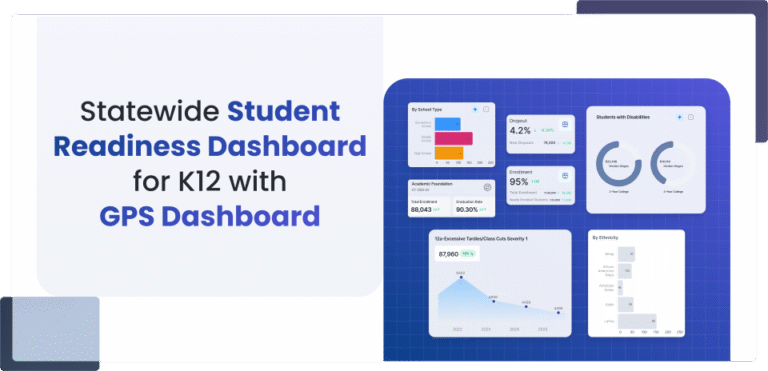
A statewide GPS Dashboard unifies readiness data across academics, well-being, civic involvement, and workforce outcomes, helping leaders identify gaps early and strengthen student pathways from school to career.
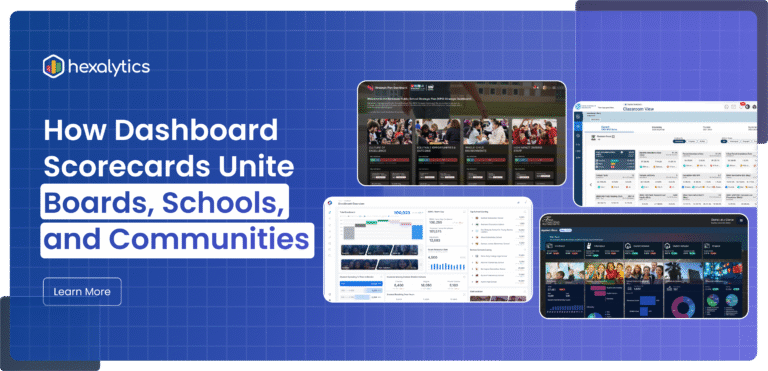
In every school district, there are important questions being asked every day: Are our students learning what they need to thrive? Are we supporting every child, in every school? Are our efforts actually making a difference? The truth is—everyone’s trying their best. But it’s hard to stay on the same page when different people are…

Across the U.S., education leaders are rethinking how data connects learning from preschool through postsecondary education. The P-20 model, which spans early learning, K-12, higher education, and workforce readiness, aims to make every learner’s journey coherent, measurable, and supported by shared insight. Yet most education systems still operate in silos, limiting visibility into how early…