As we step into 2026, workforce analytics has evolved from a niche HR tool into a strategic imperative for organizations worldwide. Driven by rapid advancements in AI, data integration, and predictive technologies, it’s reshaping how companies manage talent, optimize performance, and drive business outcomes.
For HR professionals, recruiters, and Chief Human Resources Officers (CHROs), staying ahead means leveraging analytics not just for insights but for proactive decision-making in an era of hybrid work, skills shortages, and economic uncertainty.
This blog explores the latest trends in workforce analytics, backed by market data, and introduces Hexalytics’ innovative HR Dashboard—a game changer designed to bring these trends to life.
Emerging Trends in HR Analytics
In 2026, HR analytics is all about harnessing AI to create more agile, resilient workforces. One key trend is the rise of agentic AI in HR, where AI agents handle routine tasks like scheduling, compliance checks, and initial data analysis, freeing HR teams for strategic roles.
According to industry insights, HR organizations may eliminate 30-40% of traditional roles as they transition to AI-supercharged models. This shift emphasizes AI governance, with HR leaders establishing policies for bias audits, ethical usage, and human oversight to ensure fairness.
Another major focus is predictive analytics for employee well-being. With burnout becoming a “boardroom hazard,” analytics tools now forecast risks by analyzing data on workload, engagement, and absenteeism.
HR teams are using these insights to implement personalized interventions, such as flexible scheduling or mental health resources, aligning with the trend where “time out-values money” for employees.
Additionally, skills-based workforce planning is gaining traction, with analytics helping create employee skill inventories to address gaps proactively. This is crucial amid economic slowdowns, where hiring freezes push organizations toward internal mobility and upskilling.
Organizational culture and change management also benefit from analytics. Real-time sentiment analysis from surveys and collaboration tools helps HR track cultural health, while predictive models forecast the impact of changes like remote work policies.
These trends underscore a move toward data-driven HR, where analytics isn’t retrospective but forward-looking, enabling better retention and productivity.
Trends Revolutionizing Recruitment in 2026
Recruitment is undergoing a profound transformation, with workforce analytics at its core. The human-AI partnership is redefining talent acquisition, where AI handles sourcing, screening, and even initial interviews, but humans focus on relationship-building and final decisions.
Tools like generative AI for job descriptions and predictive matching reduce time-to-hire by up to 40%, but ethical considerations—such as avoiding bias in algorithms—are paramount.
Amid flat hiring levels (49% of employers expect no change in early 2026), analytics helps optimize limited budgets by predicting hiring needs based on turnover trends and business forecasts. Skills-based hiring dominates, with analytics platforms assessing candidates’ competencies over credentials, drawing from internal data lakes to match roles dynamically.
Recruitment teams are also leveraging diversity analytics to track pipeline equity, ensuring inclusive practices that mitigate risks like “premature AI-driven layoffs” leading to rehiring costs.
Moreover, remote and hybrid recruitment analytics track engagement in virtual processes, using data from video interviews to predict cultural fit. As economic uncertainty persists, these tools help recruiters focus on high-impact hires, turning recruitment from a reactive function into a strategic asset.
Implications for CHROs: Leading with Data
For CHROs, 2026 demands a blend of visionary leadership and analytical prowess. Key skills include using analytics to predict problems, such as talent shortages or engagement dips, by integrating workforce data with market insights.
CHROs are now pivotal in AI transformation, leading workforce to redesign and ensuring hybrid models—where humans and AI agents collaborate—enhance rather than erode performance.
Strategic priorities like leadership development and organizational culture rely on analytics for measurable outcomes, with CHROs using dashboards to monitor progress and adjust in real-time. In an AI-era, addressing risks like “workslop” (low-quality output from overworked teams) requires CHROs to advocate for balanced AI integration. Overall, CHROs must foster trust through transparent data use, positioning HR as a business partner in navigating 2026’s challenges.
Market Data and Growth Projections
The workforce analytics market is booming, reflecting these trends. According to Fortune Business Insights, the market is projected to reach USD 2.72 billion in 2026, growing to USD 7.12 billion by 2034 at a CAGR of 12.78%. Research and Markets estimates a value of USD 4.47 billion in 2026, expanding to USD 9.34 billion by 2032 with a 12.9% CAGR, driven by AI adoption and demand for efficient management.
Grand View Research reports the market at USD 2.14 billion in 2023, forecasted to hit USD 5.53 billion by 2030 at 15.3% CAGR, fueled by operational efficiency needs. Technavio predicts growth of USD 3.27 billion from 2025-2029 at 19.1% CAGR, highlighting AI’s role in redefining landscapes. SkyQuest Technology notes USD 2.67 billion in 2024, projected to USD 9.69 billion by 2033 at 15.4% CAGR. These figures underscore the market’s robust trajectory, with AI integration as a primary driver.
Hexalytics’ HR Dashboard: Bringing Analytics to Life
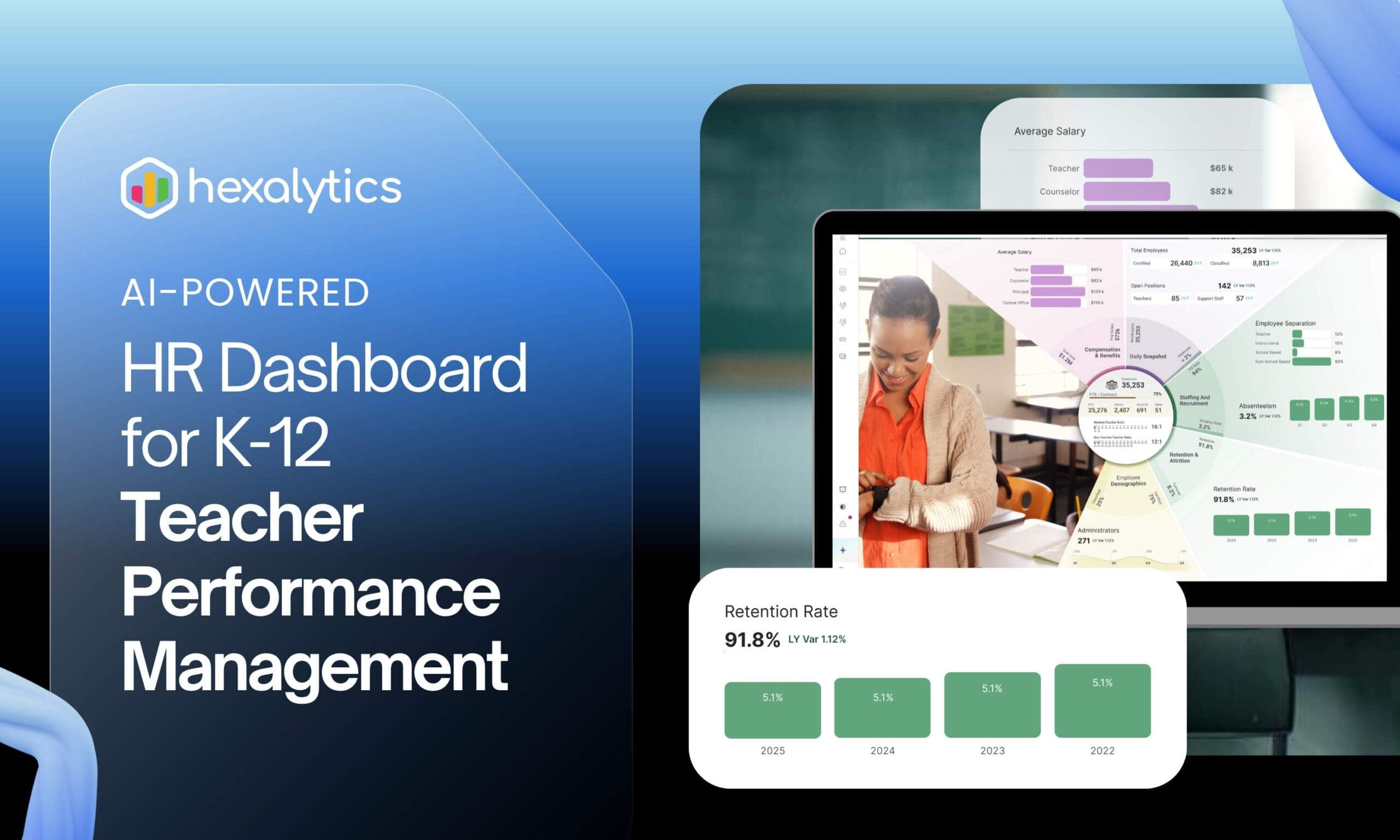
To capitalize on these trends, organizations need intuitive tools like Hexalytics’ AI-Powered HR Dashboard (HD). Designed for HR leaders, recruiters, and CHROs, this platform transforms raw data into actionable insights, addressing 2026’s demands head-on.
Referring to the dashboard’s interface (as visualized in Hexalytics’ product demos), it features a sleek, modern layout with customizable widgets for real-time metrics. Key elements include:
- Predictive Analytics Module: Forecasts turnover, skill gaps, and burnout risks using machine learning, integrating data from SIS, payroll, and engagement tools. This aligns with CHRO priorities for problem prediction.
- Skills Inventory and Recruitment Pipeline: A visual heatmap shows employee skills, enabling skills-based hiring. Recruiters can simulate scenarios, track diversity metrics, and optimize pipelines amid flat hiring.
- AI-Driven Insights Panel: Agentic AI suggests interventions, like personalized wellness plans or leadership training, with governance controls to ensure ethical use.
- Well-Being Tracker: Monitors sentiment via integrated surveys, flagging burnout trends with alerts—essential for 2026’s focus on employee health.
- Hybrid Workforce Views: Dashboards for human-AI collaboration, tracking productivity and risks like “workslop.”
- Integration Hub: Seamless connections with HubSpot, Apollo, GA4, and more, automating data pipelines for clean, real-time views.
- Custom Reports and Forecasts: Generates board-ready reports on ROI, retention modeling, and market-aligned projections.
Security is enterprise-grade, with compliance for GDPR/CCPA. Hexalytics’ HD isn’t just a dashboard—it’s a strategic partner, helping users reclaim time from manual tasks while fostering data-driven cultures. Districts and companies using similar tools report 20-30% efficiency gains.
In conclusion, 2026’s workforce analytics landscape promises innovation amid challenges. By embracing AI governance, predictive tools, and skills focus, HR, recruitment, and CHROs can thrive. Hexalytics’ HR Dashboard exemplifies this future, offering a comprehensive solution to turn trends into results. Ready to explore?