School districts have never lacked data. What they have lacked is the ability to translate that data into timely, confident action.
Enrollment systems, student information platforms, assessments, HR tools, finance applications, and surveys all generate valuable signals. Yet for many district leaders, those signals arrive late, disconnected, or buried inside static reports. As expectations for transparency, speed, and fiscal discipline rise in 2026, this gap between data and decision-making has become a strategic liability.
This is where AI-powered K–12 data analytics is reshaping how districts operate, not by adding more dashboards, but by enabling leaders to act earlier, align teams faster, and make decisions grounded in current reality.
Use Case 1: Enrollment Shifts That Inform Staffing and Budget Decisions
Enrollment data is often treated as a yearly planning input rather than a dynamic operational signal. Traditional forecasting models rely heavily on historical averages, which struggle to keep pace with mobility, school choice, and demographic change.
AI-driven enrollment analytics allow districts to continuously monitor registration activity, grade-level movement, and geographic patterns as they evolve. Instead of discovering gaps after staffing decisions are finalized, leaders gain early visibility into where enrollment is trending up or down and how those shifts will affect staffing, class size, and funding assumptions.
This form of K–12 data-driven decision making reduces late-stage hiring, minimizes budget surprises, and supports more stable planning conversations with boards and labor groups.
Use Case 2: Attendance Patterns as an Early Warning System
Attendance data is frequently reviewed in hindsight, often as a compliance metric rather than a predictive signal. By the time chronic absenteeism appears in reports, instructional impact has already occurred.
AI changes this dynamic by analyzing attendance patterns alongside enrollment, calendar data, and historical behavior to surface early risk indicators. District leaders can identify which schools, grades, or student groups are beginning to disengage and intervene before attendance issues escalate into academic or funding challenges.
This approach transforms attendance from a lagging indicator into a proactive driver of AI-driven school improvement.
Use Case 3: Breaking Down Data Silos for Unified Leadership Insight
One of the most persistent barriers to action in school districts is fragmentation. Finance teams, academic leaders, operations staff, and enrollment offices often operate with different datasets and different assumptions.
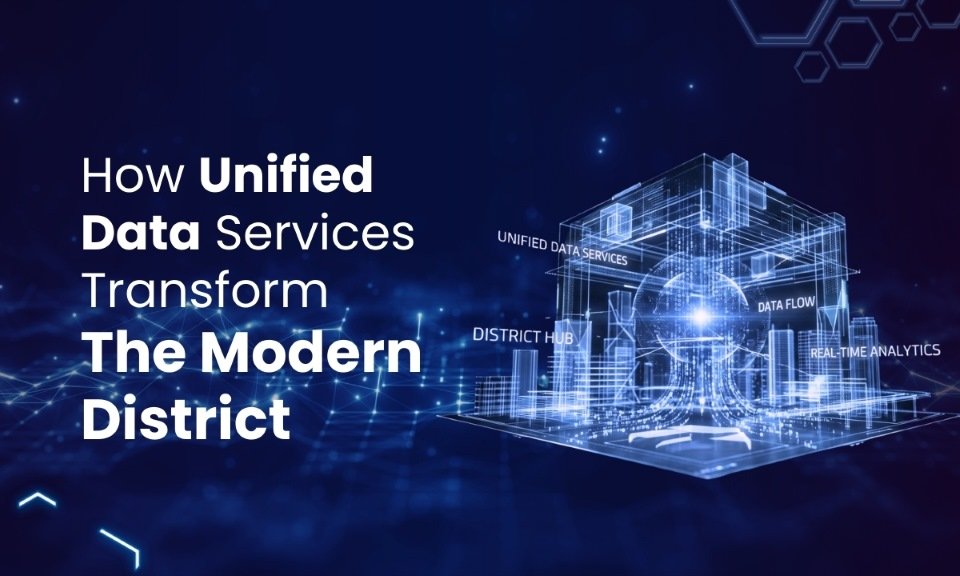
AI-powered K–12 analytics dashboards unify these perspectives by aligning data across systems into a shared analytical model. Enrollment trends connect directly to staffing projections. Financial assumptions align with operational realities. Academic outcomes can be viewed in context, not isolation.
For leadership teams, this unified view reduces reconciliation time, improves cross-functional alignment, and creates a single version of the truth for decision-making.
Use Case 4: Making Data Accessible Beyond Analysts
Even when districts have strong analytics, insight is often locked behind technical processes. Leaders must wait for reports, request custom queries, or interpret complex tables before action can occur.
AI removes much of this friction by enabling leaders to interact with data through natural-language questions and intuitive visuals. Superintendents and cabinet members can explore trends, test assumptions, and validate decisions without depending on manual report cycles.
This accessibility accelerates turning school data into action, embedding insight directly into leadership workflows rather than relegating it to periodic reviews.
Use Case 5: Real-Time Awareness for Faster, More Confident Action
The most powerful advantage AI brings to district leadership is timing. Traditional reporting structures force districts into reactive modes, responding after problems are visible and options are limited.
AI-enabled systems provide real-time data for school districts, allowing leaders to see emerging patterns as they form. Whether it is enrollment pressure at a specific campus, attendance decline in a particular grade, or budget variance driven by staffing changes, leaders can respond while corrective action is still effective.
This shift from reaction to anticipation reduces emergency decisions, protects instructional continuity, and strengthens public confidence.
From Data Volume to Strategic Clarity
Artificial intelligence does not replace experience, judgment, or local context. It enhances them by filtering noise, connecting signals across domains, and presenting insight when it is most actionable.
Districts that adopt education data intelligence are not chasing technology trends. They are building leadership capacity. They are moving faster without sacrificing rigor, communicating more clearly with stakeholders, and aligning resources with real student needs.
As K–12 systems face increasing complexity, the ability to translate data into timely, informed action is becoming a defining leadership capability. In 2026, AI is no longer an emerging concept. It is becoming the infrastructure that supports smarter, more resilient district decision-making.
How Districts Operationalize AI-Driven Insight with Hexalytics
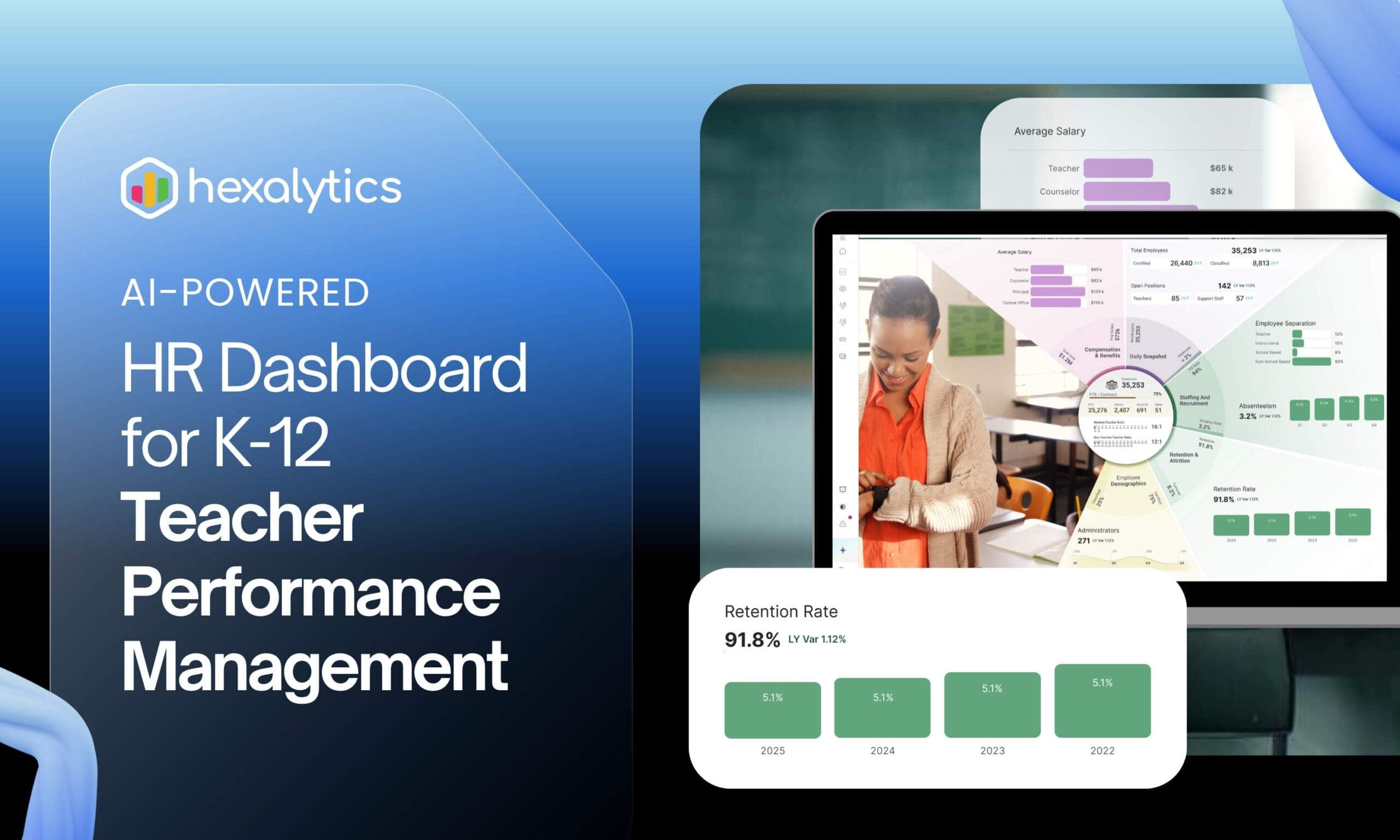
Turning K–12 data into action requires more than analytics. It requires leadership-grade intelligence. Hexalytics is built for districts that need continuous visibility across enrollment, attendance, academics, finance, and operations, not disconnected reports reviewed after decisions are already made.
As a unified AI intelligence layer, Hexalytics brings district data together and elevates it into decision-ready insight. Enrollment becomes a live planning signal. Attendance and academic patterns surface emerging risk early. Staffing and budget decisions align to verified trends, not legacy assumptions.
By establishing a shared source of truth across departments, Hexalytics reduces reconciliation, strengthens alignment, and enables confident leadership conversations. It does not replace judgment. It sets the standard for informed, proactive district leadership in 2026 and beyond.
Key Takeaways
- AI-Driven Enrollment Planning for Staffing and Budget Decisions
- Predictive Attendance Analytics for Early Intervention
- Unified K–12 Data for Leadership Alignment
- Accessible AI Insights for District Leaders
- Real-Time District Data for Confident Decision Making
- From K–12 Data Volume to Strategic Clarity
- Operationalizing AI-Driven Insight with Hexalytics
- FAQs